

As classrooms become increasingly dependent on technology, cybersecurity has become a critical issue for K–12 schools. Across Michigan, in particular, school districts are seeing a sharp rise in ransomware attacks. These incidents are part of a broader national trend that targets educational institutions, which often lack strong cyber defenses.
Ransomware Attacks Are Disrupting Michigan Schools
In late 2022, a ransomware attack on Jackson County Intermediate School District forced multiple schools to shut down for three days. As a result, the district invested tens of thousands of dollars in new cybersecurity services to help prevent future disruptions. Similarly, attacks at South Redford Schools and Kellogg Community College caused temporary closures. These incidents highlight just how vulnerable educational institutions have become.
More importantly, these attacks do not only disrupt daily operations. They halt learning, delay exams, and place additional strain on already tight school budgets.
Why Schools Are Prime Targets
Schools face unique cybersecurity challenges. Staff members regularly receive emails and attachments from parents, vendors, and outside partners. Because of this, phishing attacks can be difficult to identify. In addition, hackers exploit less obvious entry points, such as remote-access tools, security cameras, and internet-connected building systems.
Once inside a network, attackers can lock systems and steal sensitive data. This information may include student and employee Social Security numbers, financial records, and other personal details. Over time, stolen data can be sold or used for identity theft, creating long-term risks for families and staff.
The Growing National Cybersecurity Crisis in Education
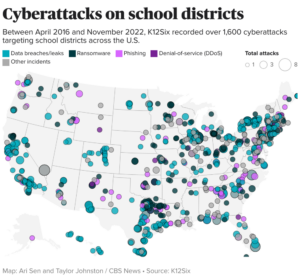
Michigan’s experience reflects a nationwide issue. Dozens of U.S. school districts were hit by ransomware in 2022. Soon after, 2023 became the worst year on record for school cyberattacks. In some cases, hackers leaked large amounts of student and staff data after districts refused to pay ransoms.
As a result, schools were often forced to close temporarily. These incidents also exposed highly sensitive records, including medical information, special education files, and psychological evaluations.
Limited Resources, Expanding Risks
Many K–12 districts operate with small IT teams, outdated infrastructure, and limited cybersecurity budgets. At the same time, the push toward digital learning has increased the number of devices and systems connected to school networks. This expansion has significantly increased the potential attack surface.
Federal agencies have warned that without proper safeguards, rapid technology adoption in schools creates more opportunities for cybercriminals to exploit security gaps.
Strengthening Cybersecurity in K–12 Schools
While no system is immune to attack, schools can significantly reduce their risk by adopting proven cybersecurity best practices:
-
Maintain regular, offline data backups to ensure recovery without paying ransoms
-
Implement multi-factor authentication (MFA) to protect user accounts
-
Keep systems updated and patched to close known vulnerabilities
-
Segment networks to prevent attacks from spreading
-
Train staff and students to recognize phishing and social engineering attempts
-
Develop and test incident response plans to minimize downtime during an attack
-
Leverage external cybersecurity partners when internal resources are limited
Cybersecurity Is Now a Core Part of Education
Ransomware attacks on Michigan schools are no longer rare or isolated events—they are an ongoing threat to K–12 education. A single incident can shut down schools, expose sensitive data, and disrupt learning for thousands of students.
By making cybersecurity a priority and investing in both technical protections and staff awareness, school districts can build resilience against modern cyber threats and protect the communities they serve.
CTS Companies can help assess your current IT infrastructure and develop a step-by-step migration or replacement plan that fits your budget and technology environment. Our goal is to help school districts stay secure, compliant, and fully supported for the long term; explore Managed IT Services for schools here. For a real‑world example of the growing threat to schools’ networks and the costly disruptions that result, read about the spike in ransomware attacks on Michigan school districts in this Michigan Public article. For additional details, please see information from the Cybersecurity and Infrastructure Security Agency’s (CISA) website on cybersecurity threats to K-12 education organizations.